







One of the most frequent questions I’m asked about cycle touring is ‘how do you keep your bike safe from being stolen?’. Ultimately, you can’t. However there are some sensible things that you can do to make it more difficult for someone to whip off with your bike. Towards the end of last year, Roger Adams emailed me asking the question. He is preparing to head off to Normandy and Brittany to do some cycle-camping and had discovered my online content about the 2022 cycle around France. He’s just ome back to me with a reply to what I sent him and I went back to read my own email from January (as I had forgotten what I’d written). It makes sense to share my thoughts here. How do I keep my bike safe?
It’s certainly something that I have worried about in the past and it’s definitely an ongoing ‘concern’. I think on my first long tour (back in 2009) I took a D-lock with me, but they are obviously very heavy. Then I read Mark Beaumont’s first about (the one about him cycling around the World for the first time) in which he explains that he never locked his bike when travelling. I’ve never quite taken that attitude, but I seem to remember him justifying his decision by pointing out that, actually (despite the thousands of pounds that you know you might have paid for your bike), touring bikes are not that attractive to your average thief. I think I agree. Thieves (whether professional or casual) prefer high-end road bikes that they can sell online or mountain bikes that they can go down the pub and fence to someone for a birthday present for their kids. Touring bikes aren’t that sexy (although we would probably think they are!). They are heavy, more traditional in design and increasingly have things like Rohloff hubs and strange handlebars. Despite their cost, I think they make the bike less attractive when it comes to being stolen. I think that is all worth bearing in mind. You’ve invested in a good quality, reliable Volkswagen, not a BMW, Audi or Porsche.
It’s also worth bearing in mind that during a tour, you don’t leave your bike alone for very long. For most of the time you are physically connected to your bike or are not very far away. The fact that you have panniers on the bike also makes the bike less attractive, despite what you have inside (which, let’s face it, is rarely worth stealing).
That said, touring bikes still get nicked and on occasions you do need to leave your bike on its own. I suppose the same common-sense tips apply to touring cyclists just as they do for anybody else using a bike:
- Leave it in a well frequented place so that thieves would be seen if they tried to steal it
- If you do lock it, use locks which are light and inconvenient, not necessarily heavy
- Ask if someone can look after it or at least keep an eye on it (a tourist office for example or security guard at the entrance)
- Take the bike inside the building if you can (many continental supermarkets have a large foyer area – take it in, lock it then scarper quickly before you can be told off)
I have a Dutch bike – a Koga – and it came fitted with a Dutch-style lock on the rear wheel. It’s a bolt that goes through the rear wheel and stops anyone from easily jumping on the bike and riding off. They would need to pick it up and carry it. The lock would take some time to break. I think you can retrofit this type of lock, and I would certainly recommend it.
And finally, when camping, I ‘booby-trap’ the bike. Basically, do things that would make it difficult for someone to take the bike without attracting attention; thread tent guy ropes through the spokes, attach my helmet through the wheel etc…
One last thing is with the panniers. I used to clip them to the frame with carabiner clips, but this drove me nuts as they were always making a clanking noise. I then started to use reuseable cable ties. These are brilliant. Only you know they are reusable and again, they cause a problem for any passing thief as they have got to work out how to remove them. A couple on each pannier works a treat.
Ultimately people still have their touring bikes stolen. The secret is, I suppose, in making sure that your bike isn’t the obvious one for a thief to take.
Any advice of your own? Add them in the comments section below.


LATEST CYCLING EUROPE POSTS:
- Reviewing The Reviews: 100 Episodes Of The Cycling Europe Podcast
- 100 Episodes (Nearly…) Of The Cycling Europe Podcast: A Journey Across A Continent (And Beyond)
- The Cycling Europe Podcast: Episode 099 – Gerald Huber – The North Cape 4000
- Episode 099: Gerald Huber – Cycling The North Cape 4000
- Top Charities & Grants That Provide Special Needs Tricycles For Families
Subscribe to the Cycling Europe YouTube Channel

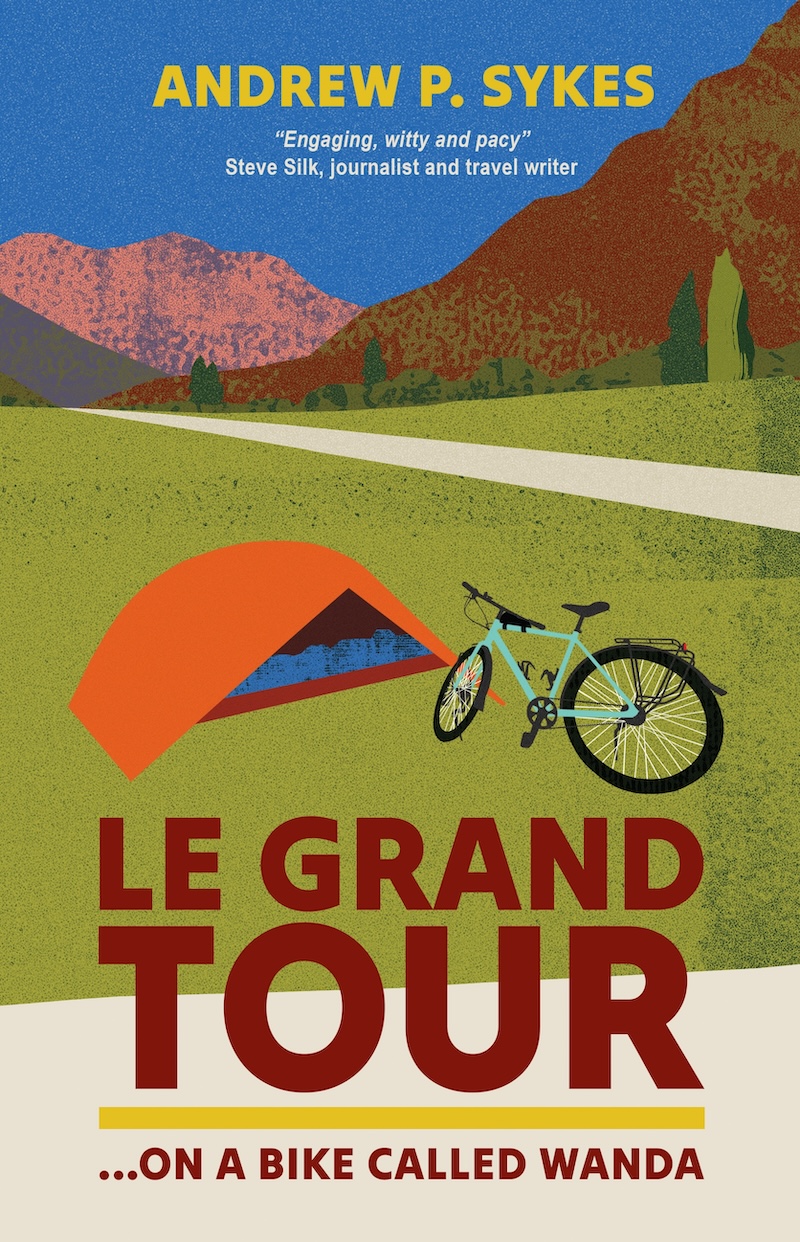
Le Grand Tour on a Bike Called Wanda, was published in May 2024 and recounts Andrew P. Sykes’ journey around France, into the Alps and down the Rhine in the summer of 2022. It is available as a paperback and as and eBook from Amazon.co.uk, Amazon.com (and other international Amazon sites). The paperback is also available from Waterstones or Foyles and the eBook from Apple iBooks.
Since 2009, CyclingEurope.org has established itself as a valued, FREE cycle touring resource. There’s now even a podcast, The Cycling Europe Podcast. If you enjoy the website and the podcast, please consider supporting the work of CyclingEurope.org with a donation. More information here.
Catch up with The Cycling Europe Podcast:


Discover more from CyclingEurope.org
Subscribe to get the latest posts sent to your email.


In addition to a U-shaped lock, I use removable pedals (MKS)
Interesting. I never knew such pedals existed. Are they easy to remove?
+1 for the reusable cable ties. I use them on pannier and through wheel frame. Hiplock make some steel lined ones, which are marginally harder to get off for the opportunistic thief. If someone’s properly equipped nothing is going tk stop them, so for me its a sensible lightweight compromise. At the end if the day, I try not to worry to much about it
Reusable cable ties are one of those small things gs that has transformed my cycle touring experience!